 Image 1 of 1
Journeying
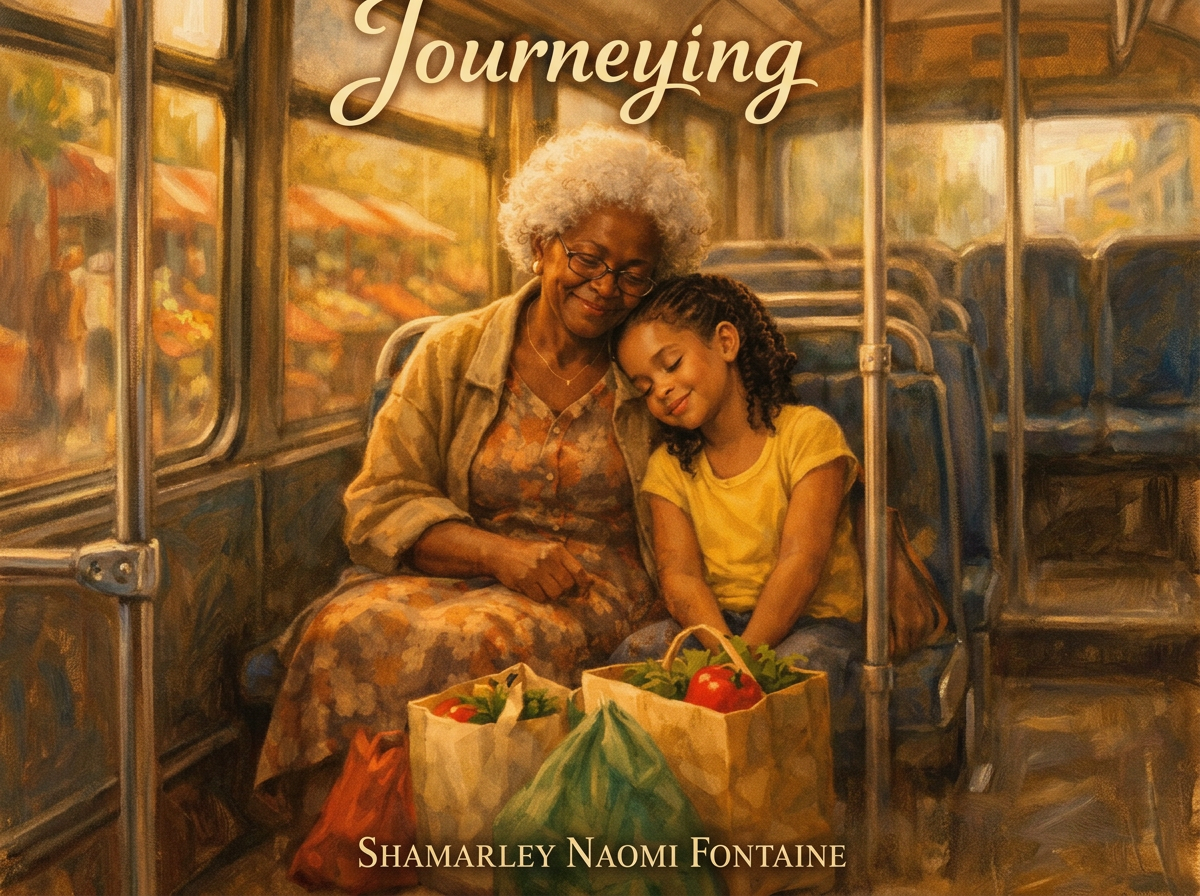
Journeying is a lyrical, memory‑driven story about a granddaughter’s childhood trips with her grandmother, Miss Claris — journeys that become symbols of love, culture, and the deep bonds within a Caribbean family living in Britain. Told through vivid sensory detail and intimate recollection, the narrative captures how ordinary routines transform into treasured memories.
The story opens in the kitchen, where Miss Claris prepares chicken with meticulous care: washing it under cold water, squeezing lemon and lime, seasoning it with scallion, thyme, peppers, and Scotch bonnet. Her humming fills the room as rice boils with butter and thyme. These domestic scenes establish her as a woman of precision, tradition, and warmth, and show how the narrator learned by watching, absorbing the rhythms of her grandmother’s world.
Their weekly journey begins with the X6 bus — fast, direct, and familiar. The narrator sits by the window sucking a Trebor mint, observing flats, tunnels, graffiti, shops, ponds, and people. The bus ride becomes a moving canvas of childhood wonder. At the market, the world bursts into colour and noise: stalls packed with vegetables, sweets, doughnuts, spices, and meats. Miss Claris inspects produce with sharp humour (“Dat no look gud!”), chats with vendors she knows well, and moves through the crowd with confidence and charisma. Her interactions — with the veg man, the meat man, the spice man, Sister Brown, Sister Pat, Brother Brown — reveal a tight‑knit community held together by shared culture, faith, and everyday conversation.
The narrator, pockets full of Haribo and liquorice, trails behind her grandmother, absorbing the sights, sounds, and dialect. The market is exhausting but joyful, a place where identity is reinforced through food, language, and connection. The journey home is slower, weighed down by bags, but filled with comfort: crisps, doughnuts, Samson the dog waiting at the gate, Grandad smoking his roll‑up, and the familiar ritual of tea and rest. The narrator’s tired feet become a symbol of the
effort and reward of these shared journeys.
In the final section, the tone shifts to remiscing. The narrator speaks directly to her grandmother, now gone, imagining her final journey “home‑home.” She wonders whether it was like the X6 — whether she travelled quickly, whether she saw familiar sights, whether someone helped her carry the bags. The questions are reflective: Was she alone? Did she meet familiar souls? Did she still say “Tel ar me ses ‘o de doo”? Did she arrive safely?
This imagined journey becomes a metaphor for death, framed through the lens of childhood memories. The narrator looks at her grandmother’s photograph — stylish, confident, beautiful — and hopes she travelled with the same dignity and grace she carried in life. The story closes with a sense of role reversal: the granddaughter now worries about her grandmother’s safe arrival, just as Miss Claris once worried about hers.
Journeying is ultimately a meditation on memory, migration, family, and the sacredness of everyday family connection and life. It honours a grandmother’s life through the journeys she made — to the market, through her community, and finally beyond — and celebrates the love carried in every step.